Farewell to Life on Earth: The Inevable End and Humanity’s Journey Beyond the Stars

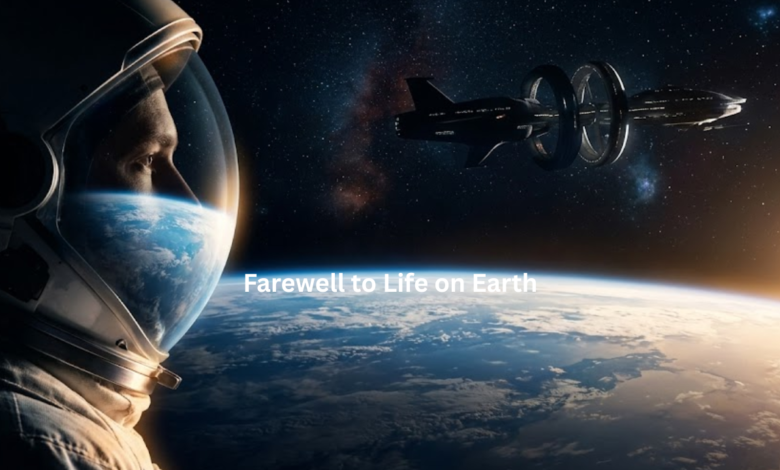
Farewell to Life on Earth – For billions of years, Earth has been the only stage for the grand drama of existence. From the first microscopic sparks in primordial oceans to the rise of civilizations, our planet has been a resilient sanctuary. However, scientific reality suggests that our residency here is not permanent. Whether through the inevitable evolution of our sun or the eventual migration of humanity to the stars, there will one day be a definitive farewell to life on earth.
Understanding this transition requires looking at both the astronomical timeline and the potential for human legacy beyond our home world. It is a story of endings, but also of incredible new beginnings.
The Natural Timeline of Earth’s Habitability
Earth isn’t just a rock; it is a complex, balanced machine. That balance, however, is subject to the life cycle of the Sun. Currently, the Sun is a stable “middle-aged” star, but as it burns through its hydrogen fuel, it becomes slightly brighter and hotter over vast periods of time.
In about one billion years, the Sun’s increased luminosity will likely cause Earth’s oceans to evaporate. This “moist greenhouse” effect will signal the biological end for most complex organisms. While a billion years is an unfathomable amount of time for a human life, in the cosmic calendar, it represents the final chapters of Earth’s story.
The Stages of Planetary Aging
As the planet ages, several key milestones will mark the decline of Earth’s ability to support life as we know it:
- CO2 Depletion: Increased heat accelerates the weathering of silicate rocks, which traps carbon dioxide. Eventually, levels may drop too low for plants to perform photosynthesis.
- Oceanic Loss: As temperatures soar, water vapor reaches the upper atmosphere and is lost to space via photodissociation.
- The Red Giant Phase: In approximately 5 to 7 billion years, the Sun will expand into a Red Giant, likely engulfing the inner planets, including Earth.
Humanity’s Exit Strategy: Multi-Planetary Life
If the farewell to life on earth is inevitable due to solar evolution, the survival of the human spirit depends on our ability to leave the nest. Space agencies like NASA and private ventures like SpaceX are already laying the groundwork for what could be the greatest migration in history.
Potential New Homes
Finding a “second Earth” is the primary goal of modern astrobiology. Scientists look for planets within the “Goldilocks Zone”—the region around a star where temperatures are just right for liquid water.
- Mars: The most immediate candidate. While harsh, its proximity and presence of frozen water make it the primary target for early colonization.
- Europa and Enceladus: These moons of Jupiter and Saturn host subsurface oceans. If life exists there, it may provide a blueprint for how we can survive in icy environments.
- Exoplanets: Systems like TRAPPIST-1 offer Earth-sized planets that may one day host human outposts, provided we develop the propulsion technology to reach them.
Technical Challenges of Leaving Earth
Leaving our home is not as simple as building a bigger rocket. The biological and mechanical hurdles are immense. Space is an environment that the human body is not evolved to endure for long periods.
| Challenge | Impact on Humans | Potential Solution |
| Microgravity | Muscle atrophy and bone density loss. | Centripetal force (rotating ships) to create artificial gravity. |
| Cosmic Radiation | Increased risk of cancer and DNA damage. | Advanced shielding and magnetic field generators. |
| Life Support | Need for oxygen, water, and food. | Closed-loop bioregenerative systems (hydroponics). |
| Distance | Mental health and isolation over years of travel. | High-speed propulsion or cryo-sleep technology. |
The Philosophical Weight of Saying Goodbye
Saying “farewell” implies a sense of loss. For humans, Earth is not just a habitat; it is the source of our culture, art, and history. Every mountain climbed and every ocean crossed is part of a collective memory tied to this specific gravity and this specific atmosphere.
As we look toward the stars, we face a “generational trauma” of leaving behind the only place that ever felt like home. This transition will likely redefine what it means to be human. Will a person born on a Martian colony still feel a connection to the forests of the Amazon or the snow of the Himalayas?
Preserving Earth’s Legacy
Digital archives and “seeds of life” vaults (like the Svalbard Global Seed Vault) are current efforts to ensure that if we do leave, we take the essence of Earth with us. These repositories act as a biological and cultural backup, ensuring that the history of Earth survives even if the planet itself becomes uninhabitable.
The Role of Artificial Intelligence and Robotics
Before humans take their final steps off-planet, our mechanical precursors will have already settled. Robotics and AI are the vanguard of the farewell to life on earth. They can survive the radiation of deep space and the vacuum of the moon, building the infrastructure—domes, power plants, and oxygen factories—that humans will need upon arrival.
In many ways, the “life” that says goodbye to Earth might eventually be a hybrid of biological and digital existence, optimized for the rigors of the cosmos.
Frequently Asked Questions
1. Is Earth’s destruction imminent?
No. While there are environmental challenges today, the natural destruction of Earth due to the Sun’s evolution is roughly a billion years away. Our current focus remains on preserving the planet for the thousands of generations to come.
2. Can we move the Earth to a further orbit?
This is a theoretical concept in “planetary engineering.” Some scientists suggest that using the gravity of redirected asteroids could slowly nudge Earth’s orbit further from the Sun as it gets hotter, though this is far beyond our current technical capabilities.
3. Which planet is the most likely successor to Earth?
Mars is the current favorite for a colony. However, for a long-term “new Earth,” we would likely look toward exoplanets in the Proxima Centauri or TRAPPIST-1 systems.
4. Will everyone leave Earth or just a few?
Initially, space travel will be for a select few—scientists and pioneers. However, if Earth becomes truly uninhabitable, the goal would be mass migration, though the logistics of moving billions of people remain a major science-fiction-level hurdle.
5. What happens to the animals and plants?
Any serious attempt to leave Earth would involve “Noah’s Ark” style missions. We would need to transport entire ecosystems to maintain biological diversity and provide the oxygen and food necessary for human survival.
Final Thoughts
The concept of a farewell to life on earth is both sobering and inspiring. It reminds us of the fragility of our current existence and the incredible resilience of life. While Earth has been a magnificent cradle, the destiny of a maturing civilization may lie among the stars.
Whether this departure is forced by the slow clock of the universe or driven by our own curiosity, our responsibility remains the same: to cherish and protect our home for as long as possible, while preparing for the day we finally look back at the pale blue dot and say thank you. The end of our time on Earth doesn’t have to be the end of our story; it may simply be the beginning of our journey as a cosmic species.
Also Read: M20 Kent Vehicle Bridge Closure: Everything You Need to Know





One Comment